
Opplev Oslo som en lokal!
Vårt håndplukkede digitale kart med bare de beste skjulte perlene, restaurantene og aktivitetene i Oslo.
Oslofjord and the Closest Fjords to Oslo: How to See Them

The Oslofjord is the fjord at Oslo's doorstep: a roughly 100-kilometre coastal fjord that runs from the Færder lighthouse at the Skagerrak up to the city waterfront. It is the closest fjord to Oslo, and you can see it in an afternoon on a public ferry with a normal Ruter ticket. If you are picturing tall mountain walls from Norway photos, that is a different landscape: plan a longer journey west to the Sognefjord area.
At a glance
| Option | Best for | What to plan |
|---|---|---|
| Oslofjord islands | The easiest fjord day from central Oslo | Take a public ferry from Rådhusbrygge 4 and check the current Ruter timetable before you go. |
| Nesodden ferry | Seeing the inner fjord from the water in under an hour, with no planning | Ride the commuter ferry from Aker Brygge to Nesoddtangen and back on a Ruter ticket. |
| Drøbak or Son | A longer outing along the wider Oslofjord | Check whether the seasonal Ruter boat service is running, and allow time for the return journey. |
| Sognefjord area | Mountain walls, fjord villages and a classic western-fjord landscape | Visit Norway lists about four to five hours by car from Oslo. Treat it as an overnight or multi-day trip. |
What is the Oslofjord?
Store norske leksikon gives it as about 100 kilometres from the Færder lighthouse at the mouth to Oslo, and about 120 kilometres if you measure to the end of Bunnefjorden, the innermost arm that bends south past the city. The Drøbak Sound, the narrow strait at Drøbak, divides the fjord into the outer and the inner Oslofjord.
Three things follow from that geography:
- The inner fjord is where Oslo is. North of Drøbak the fjord is only a few kilometres wide, dotted with low wooded islands and ringed by towns and summer cabins. This is what you see from Aker Brygge, the Opera House roof and the island ferries.
- It is a coastal fjord, not a mountain fjord. The shores are low and wooded. Steep walls, waterfalls and glacier-fed water belong to the Sognefjord, Nærøyfjord and Hardangerfjord in western Norway, five hours or more away.
- It is cheap to experience. Ruter's island ferries and the Nesodden commuter ferry run on normal public transport tickets, so a fjord afternoon costs no more than a tram ride plus the ticket zone you cross.
How to see the Oslofjord from Oslo
| How | Where it leaves | Ticket | Good to know |
|---|---|---|---|
| Island ferry (Ruter line B1 Øyene, plus B1X Hovedøya and B2 Langøyene in season) | Rådhusbrygge 4, by City Hall | Normal Ruter ticket | Ruter's ferry page lists the seasonal timetables. In summer 2026 the B1 skipped Hovedøya and Gressholmen between 10:00 and 21:00 and a separate B1X shuttle covered Hovedøya every 20 minutes; check whether the same rule applies when you travel. |
| Nesodden ferry (Ruter line B10) | Aker Brygge | Ruter ticket, check the zone | A year-round commuter ferry across the inner fjord to Nesoddtangen. Ride it out and straight back for the water view without committing to an island day. |
| Boat to Drøbak (B22) or Son (B21) | Aker Brygge | Ruter ticket, more zones | Seasonal services along the wider fjord. Verify the date and the return departure on Ruter before you plan around them. |
| Sightseeing cruise | The City Hall piers | Operator ticket | Guided fjord cruises with commentary. VisitOSLO lists the current operators; choose this when you want a hosted ride rather than the freedom to get off. |
| From the shore | Sørenga, Bygdøy, Ekebergparken | Free | The Sørenga seawater pool and the Bygdøy coast path put you at the water; Ekebergparken, above the Opera House, gives the classic view down the fjord. |
What is the closest fjord to Oslo?
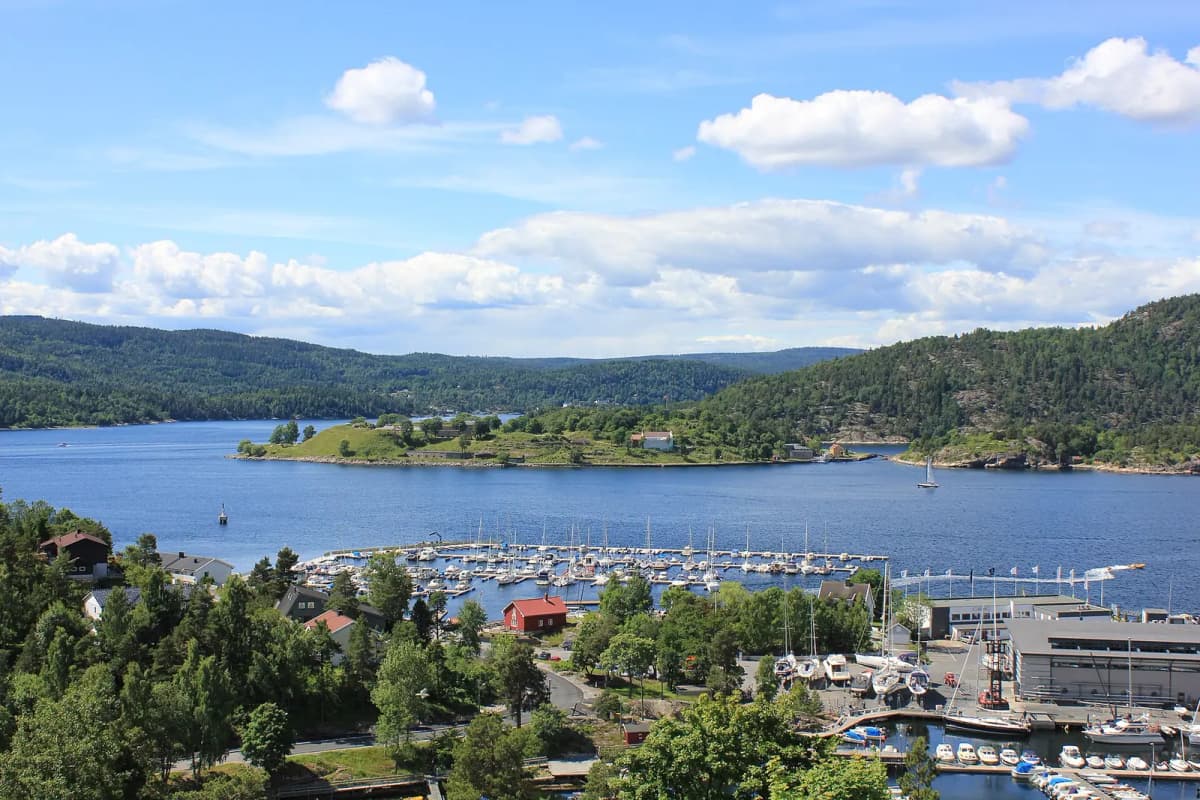
The closest fjord to Oslo is Oslofjord. The inner fjord begins at the city waterfront and reaches a group of islands that are easy to visit without a car. VisitOSLO describes the Oslo Fjord as a 100-kilometre scenic area with swimming, walking, summer cabins and water activities.
That answer can feel surprising if you are picturing narrow water between tall cliffs. Oslofjord is a broad coastal fjord with islands, low wooded shores and an urban waterfront. It is still a real fjord experience, but it is not the same landscape as the Sognefjord, Nærøyfjord or Hardangerfjord areas in western Norway.
If you want a fjord near Oslo, that is the Oslofjord. If you want steep mountain walls, plan a longer trip west.
The easiest fjord trip from Oslo
 The northeast side of Hovedøya seen from a ferry in the Oslofjord.
Photo: Leonhard Lenz / Wikimedia Commons · CC0 1.0
The simplest plan is an island trip from the city centre. VisitOSLO lists Rådhusbrygge 4 as the departure point and describes routes to Hovedøya, Bleikøya, Gressholmen, Lindøya and Nakholmen. The page also notes that regular public transport tickets are valid on the ferries.
Use Ruter's current ferry page for the timetable, route changes and ticket details. Boat services vary through the year. Ruter currently lists the inner-island lines as well as services further out towards Son and Drøbak, but the seasonal timetable is the part to verify immediately before travelling.
For a first visit, choose the island according to the day you want:
- Hovedøya suits a short mix of history, green space, shoreline and a swim when conditions allow. VisitOSLO highlights its monastery ruins, beaches and summer café.
- Gressholmen is a good choice when you want a more natural setting and a walk by the water. It can also be combined with nearby islands when the route and timetable fit.
- Lindøya or Nakholmen work for a slower island walk among the colourful summer cabins. Stay on public paths and use marked swimming areas where the local guidance recommends them.
- Langøyene is the option to investigate if you are planning an overnight tent stay. VisitOSLO identifies it as the only inner-fjord island where camping is allowed, subject to its rules.
Bring water, a light layer and a plan for getting back. There are limited shops on some islands, and the last ferry matters more than squeezing in one extra stop. Check the return departure in the Ruter app before you leave the pier.
For a step-by-step version of this short trip, see our DIY Oslofjord island-hopping guide.
Drøbak and Son for a wider Oslofjord day
 Drøbak village seen from the Oslo Fjord.
Photo: Øyvind Holmstad / Wikimedia Commons · CC BY-SA 3.0
If you want more than the inner islands, look at Drøbak or Son. They are still Oslofjord outings, not western mountain-fjord trips, but they give you a change of scenery and a reason to spend more of the day outside central Oslo.
Ruter's ferry information includes route B21 towards Son and B22 between Drøbak and Aker Brygge during parts of the year. Do not build your plan around an old timetable. Check the current Ruter page, the journey planner and the return service for your travel date.
Drøbak is also a useful starting point for an Oscarsborg plan. If a fortress visit is the main reason for your trip, compare the transport details in our Oscarsborg Fortress day-trip guide before choosing the boat or land route.
When to travel west for dramatic fjords
 View of Sognefjord from Skjolden, with steep mountains above the water.
Photo: Deb / Wikimedia Commons · CC BY-SA 4.0
Choose the Sognefjord area when you want the landscape most people mean by “Norwegian fjords”: steep mountain sides, long water arms and villages surrounded by high country. Visit Norway describes Sognefjord as Norway's longest and deepest fjord, and includes Nærøyfjord among its fjord arms and UNESCO World Heritage scenery.
This is not the closest fjord to Oslo in a practical day-trip sense. Visit Norway lists the Sognefjord area at about four to five hours by car from Oslo. It also lists daily connections from Oslo to Sogndal Airport with flight times of roughly 30 to 45 minutes, while Flåm connects with the Oslo to Bergen railway at Myrdal. Those options still need local connections and a realistic itinerary once you arrive.
For most visitors, the better plan is to spend at least one night in the fjord region. That gives you time for a cruise, a village, a viewpoint or the Flåm Railway without turning the trip into a long return drive. If your wider Norway itinerary already includes Bergen, the Sognefjord route makes more sense than trying to force it into a single Oslo day.
Which fjord option fits your trip?
Use this decision rule:
- You have half a day or one free day: stay with Oslofjord and take an island ferry.
- You want a small town or fortress day: check the current boat and land connections to Drøbak or Son.
- You want a low-effort boat experience: choose an Oslofjord sightseeing cruise or public ferry, depending on whether you prefer a guided ride or the freedom to get off.
- You want cliffs, waterfalls and a classic western-fjord landscape: travel to the Sognefjord area and stay overnight.
- You are travelling in winter or shoulder season: verify ferry frequency, daylight and weather before choosing an island or mountain route.
The important trade-off is not whether Oslo has a fjord. It does. The decision is whether you want a convenient coastal day in Oslofjord or a longer journey for the more dramatic western landscape.
More OsloExplore planning guides
For more water and island ideas, start with our Oslofjord island-hopping guide. If you want a broader warm-weather plan, combine it with summer spots in Oslo. For a history-led day outside the centre, use the Oscarsborg Fortress guide.
This article was updated on 7 November 2026. Ferry routes, seasonal departures, weather, tickets and local access can change, so use the linked official pages for the final check.
Frequently asked questions
How long is the Oslofjord and where does it start?
Store norske leksikon gives the Oslofjord as about 100 kilometres from the Færder lighthouse at the mouth to Oslo, and about 120 kilometres if you measure to the end of Bunnefjorden. The Drøbak Sound divides it into the outer and inner fjord.
What is the closest fjord to Oslo?
The closest fjord to Oslo is the Oslofjord itself. From central Oslo, public ferries reach several inner-fjord islands, making this the practical choice for a short fjord experience.
Is there a fjord near Oslo that works as a day trip?
Yes. The Oslofjord works well as a day trip because ferries from Rådhusbrygge 4 reach several islands. Drøbak and Son can make longer fjord outings when the relevant Ruter boat services are running.
What is the closest dramatic mountain fjord to Oslo?
The Sognefjord area is one of the most practical western-fjord choices from Oslo. Visit Norway lists the drive at about four to five hours, but the distance and changing transport connections make an overnight or multi-day plan more sensible than a rushed day trip.
Can I use a normal public transport ticket on the Oslofjord ferries?
Yes. VisitOSLO says regular Oslo public transport tickets are valid on the island ferries. Check Ruter for the current route, ticket zones and last departure before you leave.
Opplev Oslo som en lokal!
Vårt håndplukkede digitale kart med bare de beste skjulte perlene, restaurantene og aktivitetene i Oslo.
Relaterte artikler

DIY Oslofjord Island Hopping by Ferry
Island hopping in the Oslofjord might sound expensive, but here's the secret: you can do it using Oslo's regular public transport ferries. No tour groups, no inflated prices - just you, a ferry ticket, and access to some of Norway's most beautiful islands. The best part? These ferries run year-round and cost as much as a day's worth of city bus rides.
Oscarsborg Fortress: How to Visit from Oslo, What to Expect
Oscarsborg Fortress sits on two islands in the Drøbak Sound, about an hour from Oslo by bus 500 and a five-minute ferry from Drøbak. On 9 April 1940 its guns and torpedoes sank the German cruiser Blücher, which delayed the invasion of Oslo. The ferry runs all year, tickets must be bought before boarding, and the museum and guided tours follow a seasonal calendar on the Forsvarsbygg site.

4 Perfect Summer Spots in Oslo You Must Visit
Discover Oslo's hidden summer gems from waterfront dining to charming garden cafés - your guide to the city's most enchanting warm-weather destinations.